
Case studies / Client intake
Familywood.ca: a better first conversation
How a counselling practice moved from missed calls and a fragile DIY build to automated qualification, consultation booking and transparent conversations with Meet Nessa.
Ross St George, Owner of Familywood.ca · Published
24/7
Automated inbound call coverage
About 90%
Of incoming traffic described as routine questions, vendor pitches or other non-essential calls
30 minutes
Consultations booked directly into HubSpot calendars
Results and estimates reported by Familywood.ca; not independently audited or a guarantee of results for other practices.
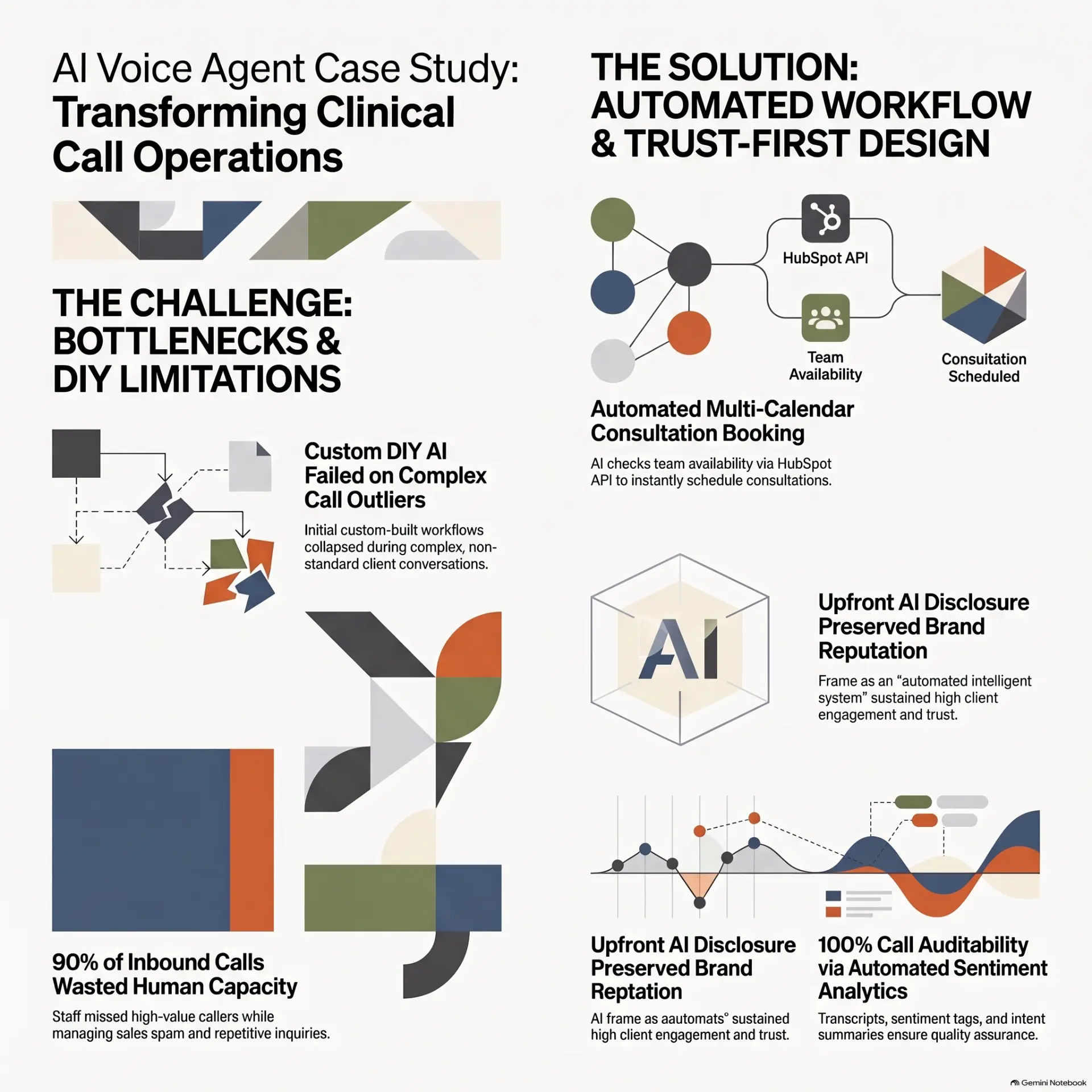
The challenge: finding the enquiries that matter
Familywood.ca offers prospective clients a complimentary 30-minute consultation to understand their needs and determine fit. Its traditional 800-number depended on staff availability. At busy times, callers could reach voicemail or keep ringing, while vendor pitches and routine enquiries consumed the team’s attention.
Ross described the high-value enquiries as “needles in the haystack”: roughly one in ten inbound calls. Missing that first conversation risked losing the very clients the practice had invested in reaching.
“If I’m investing all this money to acquire a new client and then my first interaction with them is negative, like an endless ring or a voicemail that doesn’t get returned, I think that far outweighs them interacting with a AI phone agent and actually getting the answers that they’re looking for.”
From a DIY experiment to a working intake system
Before Meet Nessa, Ross hired a developer to assemble a voice workflow using Make, n8n and Retell AI. In his experience, that particular build struggled when conversations moved beyond a linear script, especially at important decision points. He ended the project and chose a supported platform instead.
Familywood.ca then worked with Derek at Meet Nessa to tailor qualification questions, intake logic and call routing. Ross describes the underlying platform as “90% ready” at the outset, with production deployment taking two to three weeks.
What happens when a client calls?
1. Answer and qualify
Nessa answers practice questions, filters sales solicitations and identifies prospective clients who need a consultation. The goal is to reserve staff attention for the conversations that need a person.
2. Find a consultation time
Through Familywood.ca’s HubSpot integration, the agent checks availability across counsellors’ calendars, collects intake details and accounts for the caller’s time zone before booking a 30-minute consultation.
3. Transfer when appropriate
RingCentral connects callers to a practitioner when a live handoff is needed. For enquiries outside the practice’s scope, the agent explains those boundaries rather than promising services Familywood.ca does not offer.
The turning point: be transparent, not pretend-human
The first greeting introduced “Cindy, the Familywood receptionist.” Ross found that presenting automation as a person created friction when callers realised what they were speaking to. He replaced it with a direct introduction:
“Thanks for calling Familywood’s automated intelligent phone system. I can help answer any questions that you may have or book you a first consult. How can I help you?”
With expectations clear from the start, Ross reports that prospective clients were comfortable having detailed, multi-minute intake conversations. The lesson was not to disguise the technology, but to make its role useful and explicit.
Building confidence through oversight
“I must admit, I was pretty scared at first,” Ross recalls. During the initial weeks, his team reviewed recordings, transcripts and call summaries privately to check tone, accuracy and brand representation. Booking, transfer and sentiment tags helped identify recurring topics and conversations needing attention.
That ongoing review gave the practice visibility into how its intake system was working. No patient call recordings are published in this case study.
Before and after at Familywood.ca
| Workflow | Before | With Meet Nessa |
|---|---|---|
| Call coverage | Calls could ring unanswered or reach voicemail when staff were busy. | Automated answering around the clock, with qualification and escalation. |
| Client enquiries | High-intent enquiries could be lost in a much larger volume of routine calls. | Prospective clients are qualified and directed to booking or a live transfer. |
| Consultation booking | Staff coordinated availability and appointments manually. | 30-minute consultations booked into HubSpot calendars, accounting for time zones. |
| Staff interruptions | Vendor pitches and routine questions competed with client needs. | The system handles routine questions and filters sales solicitations before they reach staff. |
| First impressions | An unanswered call could undermine the investment in attracting a client. | A clear automated greeting gives callers an immediate route to answers or a consultation. |
More from Ross
Ross’s recommendation
“I definitely recommend it. Anyone who has a general phone number is going to want to get on this technology. The product that you have from lots of experience and previous investments is miles ahead of where anyone else is, and it’ll save people time and help them generate more revenue. It’s a pretty straightforward equation.”